
How Washington Poison Center Provides Significant Cost-Savings
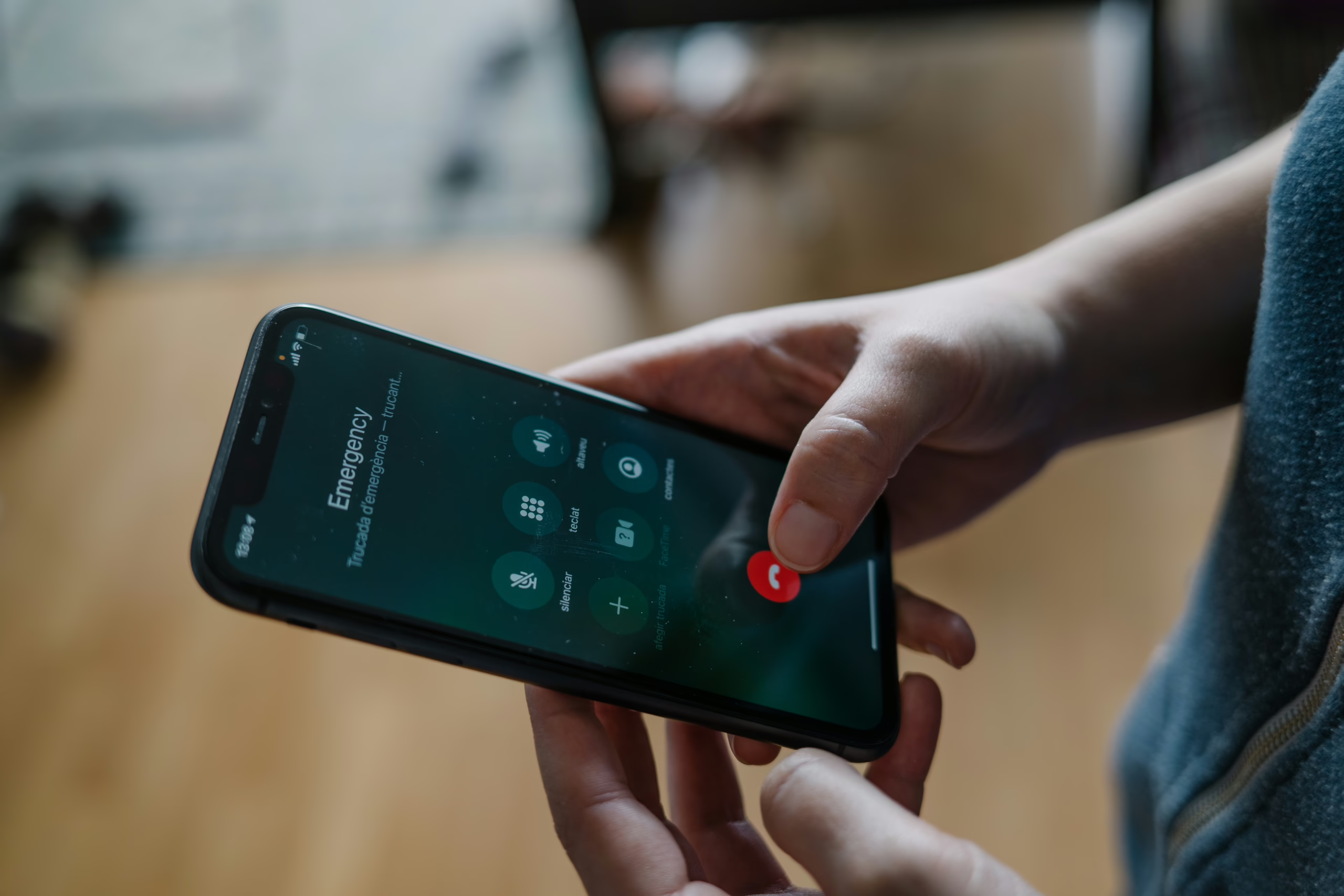
Every year, Washington Poison Center fields more than 120,000 calls a year from individuals and healthcare professionals. Nearly 93% of calls received from individuals are safely addressed at home – avoiding the stress and cost of emergency department visits.
Claire*, a 75-year-old woman, took an extra dose of short-acting insulin instead of her long-acting dose, which can cause dangerously low glucose levels. She called 911, and the dispatcher, knowing that Washington Poison Center is the first-stop resource for this type of case, connected her to WAPC for immediate risk assessment.
Devin, a pharmacist and certified poison specialist, immediately had her check her blood glucose level, which hadn’t yet reached a dangerous level. He guided her through continuous monitoring and recognizing warning signs. Devin checked in with her every 30 minutes for several hours, and she maintained safe glucose levels, avoiding an unnecessary emergency room visit. Claire’s case is a typical example of how Washington Poison Center relieves the burdens of both patients and healthcare facilities.
At the Washington Health Alliance, we believe that some hospitalizations could have been avoided. And Washington Poison Center, a local independent nonprofit, makes that a reality by leveraging its resources and experts to ensure Washingtonians are spared unnecessary hospital trips and downstream testing.
Why Washington Poison Center Matters
Joining us this fall, Washington Poison Center, whose mission “to prevent and reduce harm from poisoning through expertise, collaboration, and education,” aligns with WHA’s collaborative efforts to bring forward expertise and education that drives change in our healthcare system to improve outcomes and deliver high-value care.
“Washington Poison Center strengthens our alliance’s collective efforts to make healthcare more affordable and accessible for all Washingtonians. Their work helping patients make informed decisions and preventing unnecessary, costly hospital visits exemplifies the kind of value driven care our members advance every day,”
While Washington Poison Center and the Washington Health alliance membership have alignment on preventing and reducing harm, where does the rubber meet the road? Avoiding unnecessary care and collaborating to improve outcomes.
Since before the COVID-19 pandemic, we have seen hospitals overburdened From WHA membership’s efforts to drive more people appropriately to primary care doctors, to WAPC’s work to ensure poisonings are safely handled where appropriate, concerted efforts to keep people out of the ER unless necessary can have an outsized impact on our healthcare system.
Impact by the Numbers
The impact WAPC has with our families, friends, and communities across Washington is staggering. WAPC’s staff fielded more than 120,000 calls in 2024, providing advice to more than 60,000 patients. Nearly 93% of the public who called us from their home were treated without needing to leave, saving the stress and expense of an emergency room visit.
So how much do the services of WAPC really save our health care system?
WAPC estimates that it helped avoid nearly $24 million in immediate and direct healthcare costs in 2024 by preventing unnecessary emergency visits and treatments. When factoring in indirect cost savings, such as clinical guidance provided to emergency departments, leading to reduced hospital admissions and shorter hospital stays, the total value of WAPC’s impact is more than three times higher.
Survey of callers to the helpline, WAPC reports for the first quarter of this year:
- 20% would have called their primary care physician, likely resulting in an in-person visit
- 14% would have gone to the ED
- 7.5% would have gone to an urgent care clinic
- 8% would have called 911, triggering both Emergency Medical Services (EMS) and ED services
Informing Patients
When a Washingtonian picks up a phone, it’s essential to our multistakeholder membership that consumers and patients can make the right decisions that lead to high-value, accessible care.
Through its helpline, WAPC allows patients to play an active and informed role in their own treatment in a scenario that nearly everyone can access. On the phone, working directly with the right clinicians to make decisions that matter is an essential effort to avoid low-value care through emergency room visits and unnecessary diagnostic tests.
Equity in Access
While access is paramount, we know that it must be equitable. Without equity, we cannot have high-value care. WAPC lives up to that equity mandate by ensuring their helpline is confidential, available in 200+ languages, 24/7 every day of the year, free of charge.
Working to address disparities in care through language services and broad-reaching access moves us away from avenues toward low-value care.
Clinical Collaboration
But what if someone does go straight to a hospital or doctor’s office with a poisoning? The shared wealth of knowledge possessed by WAPC’s clinician’s steps in as well. Their staff of highly trained pharmacists and nurses provided advice to healthcare teams for approximately 14,000 patients in 2024.
Additionally, WAPC employs all six active medical toxicologists in the state. Partnering with other clinicians on toxicology matters a sizable part of WAPC’s work with nearly 30% of all calls coming from healthcare professionals. Washington state hospitals invest in this resource with a yearly contribution to WAPC.
“As uncertainty faces the healthcare landscape, Washington Poison Center continues to play an important role as a critical safety net for both the public and healthcare providers. Our service reduces or eliminates financial burdens for most callers who are able to avoid ED trips, as well as eases the strain on hospitals by helping them manage cases effectively and efficiently.”
At a time when our health care system is stretched for resources and demands are higher than ever, collaborative, like this, is key to keeping care affordable.
Looking Ahead
As the cost of care is rising with little resistance, our health care system should welcome any savings that result in good health outcomes for Washingtonians.
As we look toward 2026 and beyond, we know that collaboration is key to driving health system change with a focus on improving the health outcomes and value of care for all Washingtonians.
We must do all we can to reduce unnecessary care, empower patients to take steps to stay healthy, and work together to keep our communities safe.
If you or your organization is interested in learning more about our new member or partnering with WAPC to bring this free resource to your communities, contact Michele Meaker, Chief Development Officer, at 206-517-2355 or mmeaker@wapc.org and visit their website at wapc.org.
1-800-222-1222 Helpline is free, confidential, and available 24/7, 365 days a year, in 200 languages, for individuals and healthcare providers.
*Name changed for confidentiality