

5 Things Employers Should Take Away from the WHA May Forum
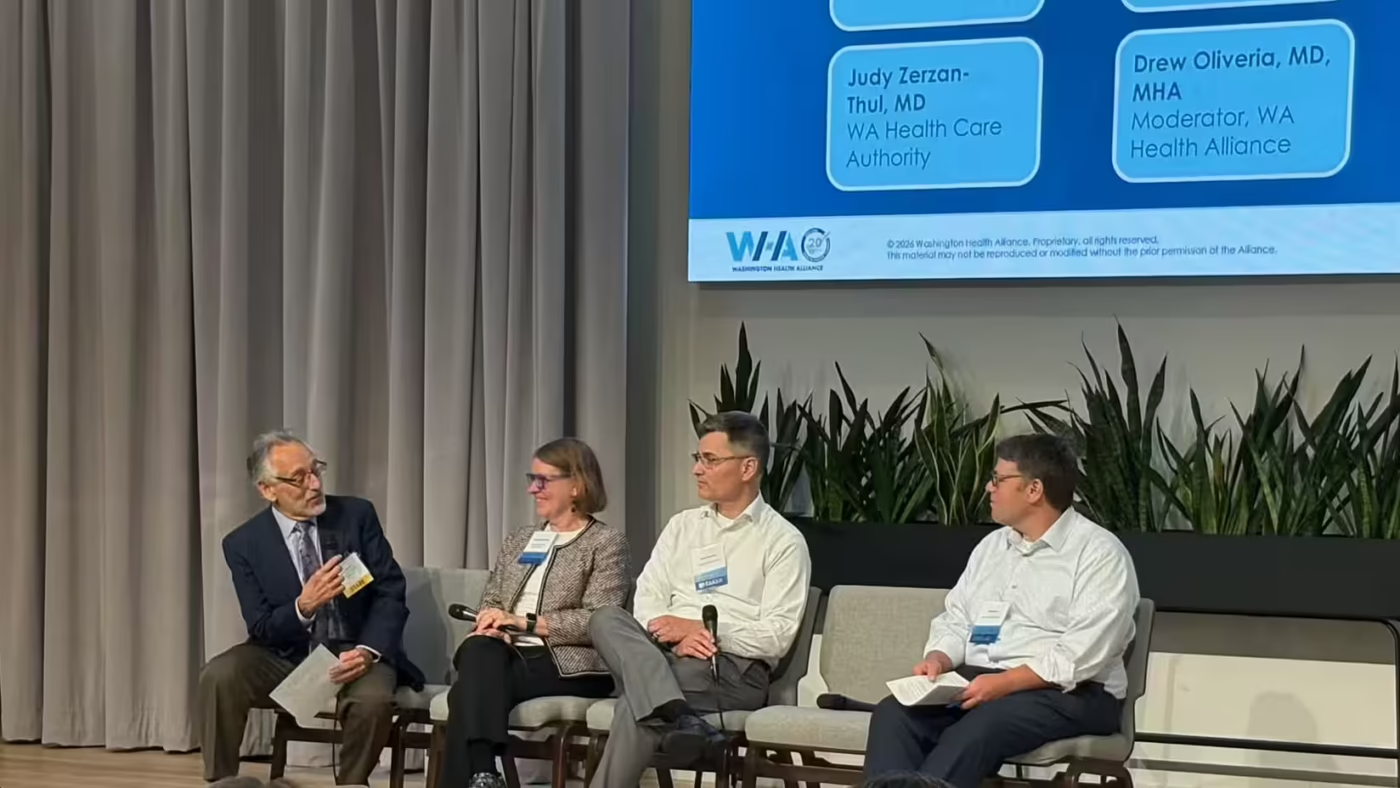
The WHA May Forum, “Beyond the Bottom Line: Strategies for High-Value, Affordable Care,” brought together employers, health plans, physicians and health systems, and data experts for a full day of honest conversation about what is and is not working in Washington’s healthcare system.
Throughout panels and keynote presentations, the issues facing employers took center stage. Here’s what they should take away:
1. You’re measuring the wrong thing.
For every dollar employers spend on healthcare, they lose $2 to $3 in lost productivity. Ray Fabius of HealthNEXT has spent a decade building the research case, and it reframes the ROI conversation entirely. Medical trend is not the metric that moves the needle. Workforce performance is. Fabius puts the split at 30/70: healthcare costs account for roughly 30% of the total impact a culture of health produces. The other 70% lives in productivity, absenteeism, and disability.
But it is important to frame the investment internally with the proper insight. If the only number you bring your CFO is a diabetes program ROI, you’re underselling the investment by a wide margin.
2. Before you build your scorecard, learn your partners’.
A scorecard is how you and your partners measure success: access, cost, quality, and employee experience. Most employers build theirs in isolation, then wonder why their health plan or physician and health system partners aren’t moving with them.
Jennifer Posa, the CIA’s first chief well-being officer and the forum’s opening keynote speaker, spent her first 90 days in that role mapping every team’s goals before she defined her own. The director of analysis tracked policy influence. Operations tracked mission readiness. Neither cared until she tied well-being to their existing metrics. Once she did, she had partners.
If your culture-of-health initiative doesn’t show up in your partners’ numbers, it won’t show up on their priority list. You can’t drive alignment without knowing what metrics the other side tracks.
3. Integrated care produces better outcomes than siloed benefits.
Boeing shared a striking data point: employees who enrolled in its weight-loss program and also accepted mental health support lost nearly double the weight of those who didn’t. The difference wasn’t the program. It was the integration. When behavioral health, nutrition, coaching, and primary care work together in one place, outcomes improve. Boeing, Vida Health, and Amazon One Medical are all building toward co-located, whole-person care near worksites. Washington State Health Care Authority Chief Medical Officer Judy Zerzan-Thul named behavioral health integration into primary care as her top scorecard priority at the forum. When the state’s largest purchaser draws the same conclusion, it’s worth paying attention. Employers who keep benefits separate are leaving results on the table.
4. Washington’s claims data is strong. Clinical data is the next layer.
Washington State’s health data infrastructure is more advanced than most states. The state’s health information exchange processes more than 260 million transactions a year, connecting physicians and health systems, health plans, and pharmacies statewide. Employers with Washington-based workforces have access to claims data that many states can’t match.
Claims data tells you what care cost. It does not tell you whether the care worked. That gap between claims and clinical data (what physicians and health systems document in the chart) matters.
The state is working to close it through the Washington Alliance for Health Data Exchange. Employers who start asking their health plan partners for clinical outcomes alongside cost data today will be ready when that infrastructure matures.
5. AI is the disruption healthcare has been waiting for, if you treat it that way.
Posa’s argument was direct: disruption is your best friend when you’re trying to change a system. AI is forcing change across the healthcare industry, and employers who see that as an opportunity will move faster than those who don’t. Amazon One Medical is already using AI scribes to give physicians more time with patients. Vida Health is building AI decision support to flag when a patient with high blood pressure still hasn’t hit their treatment goal. The employers who stay close to what their care partners are building will benefit first.
The WHA May Forum was a gathering on May 13, 2026, of Washington’s employers, health plans, and physicians and health systems. Learn more at wahealthalliance.org/health-forum-seattle.